Carnivores have become well established in all the continents except Australia, which became separated from the other continents before the first true carnivores evolved. In relatively recent times, many species introduced to Australia by man have escaped into the wild, and have formed thriving populations. These include the dingo, or Australian wild god, a descendant of the domestic dog.
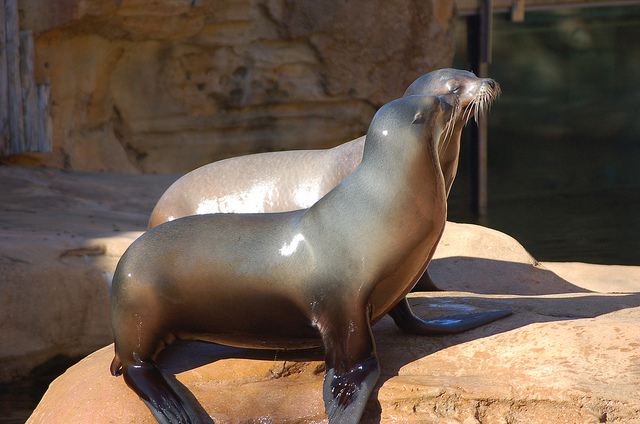
Seals and sea lions are abundant in cold polar waters, but they also occur on most of the world’s coasts. Although primarily marine animals, some live in fresh water- there are flourishing populations of seals in Lake Baikal and the landlocked Caspian Sea.
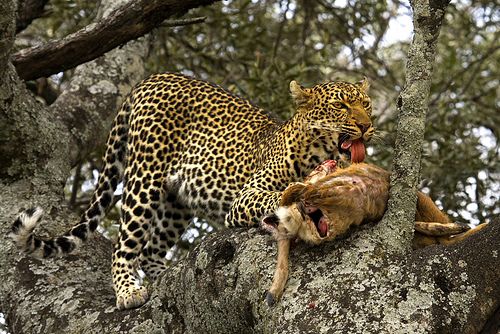
Land- dwelling carnivores are to be found in a huge variety of habitats, from subarctic tundra to tropical forest and the most arid deserts. In some cases, individual species are able to exist in a wide range of different conditions; these animals are often very widespread geographically, while more specialized species occupy more restricted areas. The leopard, for example, can live in a wide range of habitats and is found in Africa and throughout Asia to China, whereas the more highly adapted snow leopard is found only in a restricted of mountainous country in central Asia.
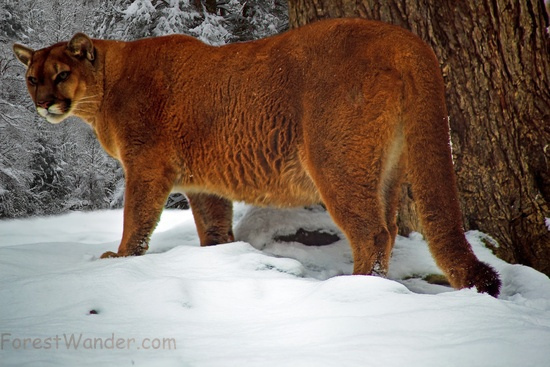
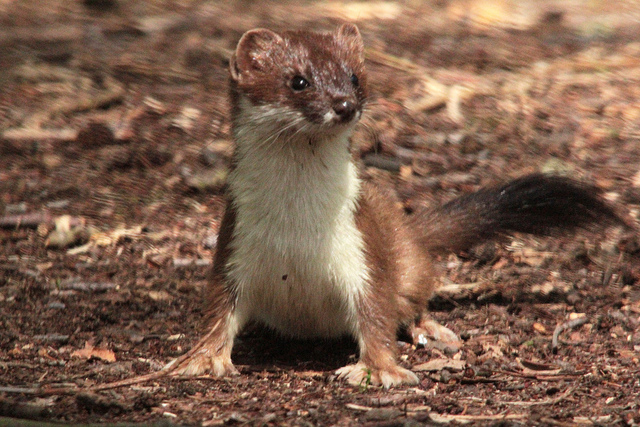
Many of an animal’s characteristics are determined by where it lives. In arctic regions and the tundra, where the weather can be incredibly cold, carnivores have thick, dense coats, small eyes and short tails to cut heat loss to a minimum. The coloration is often different in winter and summer: the stoat, for example, becomes white in the winter to blend in with the snow.
Forest-dwelling carnivores, on the other hand, often have long tails which are used to balance the animal as it moves among the trees. In a few rare cases the tail is capable of gripping, and can be used to hold on to the branches. The coats of these skilled climbers are often spotted or striped to break up the outline of the animal and help it blend into its background. They also have retractile claws on their paws.
Top of the Chain
Because carnivores eat other animals they are located at the top of the food chain- the flow of energy that begins with the plants and is transferred through a number of animals which eat and are then eaten in their turn.
Much of the initial energy contained in the plants is lost at each step: each animal uses food to fuel activity as well as growth, so there is only a fraction of the original left at the top of the food chain. Because of this the food chain can maintain very few carnivores. A study carried out in Serengerti Park of East Africa showed that the quantity of prey captured by carnivores generally accounts for about one quarter of the potential amount available. The rest of the prey animals die for other reasons and cannot always be used as food. Many vultures scavenge prey killed by carnivores and so prevent the original predators from consuming their victims. In this way the vultures restrict the food resources of carnivores and help keep their numbers down.
Although carnivores would appear to be the enemies of most grazing animals they are actually an essential part of any ecological community. They control the plant eating or herbivore populations, killing old individuals which eat valuable food, but are no longer able to breed, and destroying sick animals that may be carriers. If the carnivores were eliminated from an ecosystem, it would almost certainly collapse because the number of herbivores would rapidly increase and eat all the available food.
This has actually happened. In 1907, some 7000 deer roamed over 30,000 hectares on the Kaibab plains in Arizona. Nineteen years later, after a programme of predator extermination, the deer population had increased to 100,000. The result was massive overgrazing of the pasture: eventually there was not enough food to go round and many deer died of starvation. The predators which appeared to be the enemies of the deer turned out to be essential to their long- term survival in a balanced environment.
A Place in Life
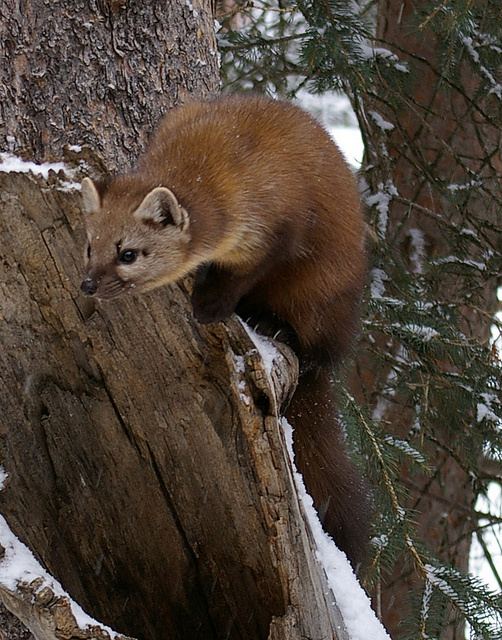
One habitat may support several carnivore species provided they have different lifestyles and so occupy different ecological niches. In a forest, for example, some carnivores such as the marten hunt in the trees, while others, such as the fox, hunt on the ground, and a predator like the other hunts only in the water.
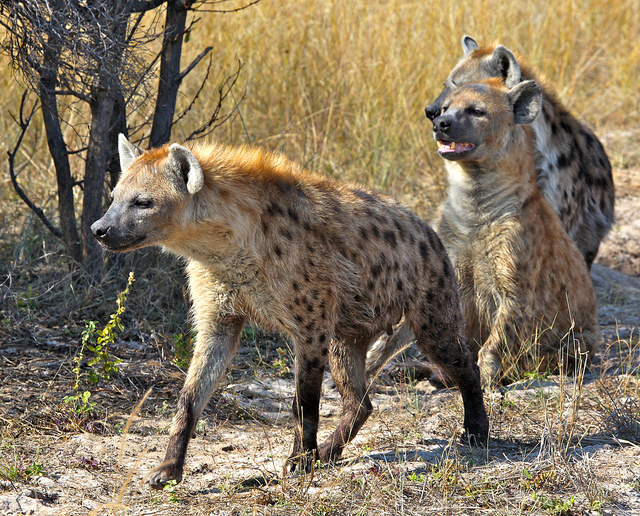
Because they do not compete, all these species can live in the same patch of forest. The choice of food is also important: active predators such as lynxes, omnivores such as badgers and carrion- eaters such as hyenas could all forage for food in the same area without competing with one another directly. The different carnivore species will also choose their prey from within certain size groups; a predator which hunts small animals can co- exist quite happily with another which concentrates on large prey.
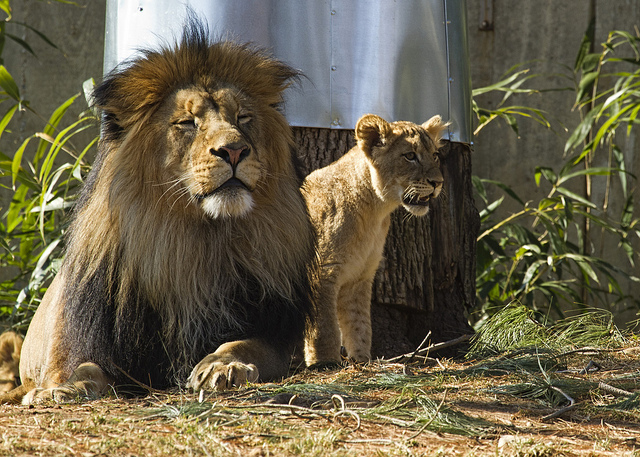
These ecological niches may be superimposed when different species are active at different times. Some carnivores hunt by night and others hunt during the day; they may live in the same area, but never meet because their habits are quite different. Lions are cheetahs, for example, both live in the African Savannah, but while lions generally hunt at night and kill large animals up to the size of a buffalo, cheetah hunt by day and prefer to feed on creatures such as small antelope.
Carnivore species that occupy the same niche in geographically distinct regions are called ecological equivalents. The leopard of the Congo and the jaguar of the Amazon are ecological equivalents because they are both predators of tropical forests – if they lived in the same area they would be in direct competition with each other for food.